Focus area 7 of 7 · Debt freedom
Release From Debt.
Every seventh year, Israel was told to release what a neighbor owed (Deuteronomy 15). We have been shown a far greater mercy, and we give out of it. The circle gives into the work of release: charities that clear medical bills, refinance predatory loans, keep the rent paid and the lights on, and walk people toward a life without debt.
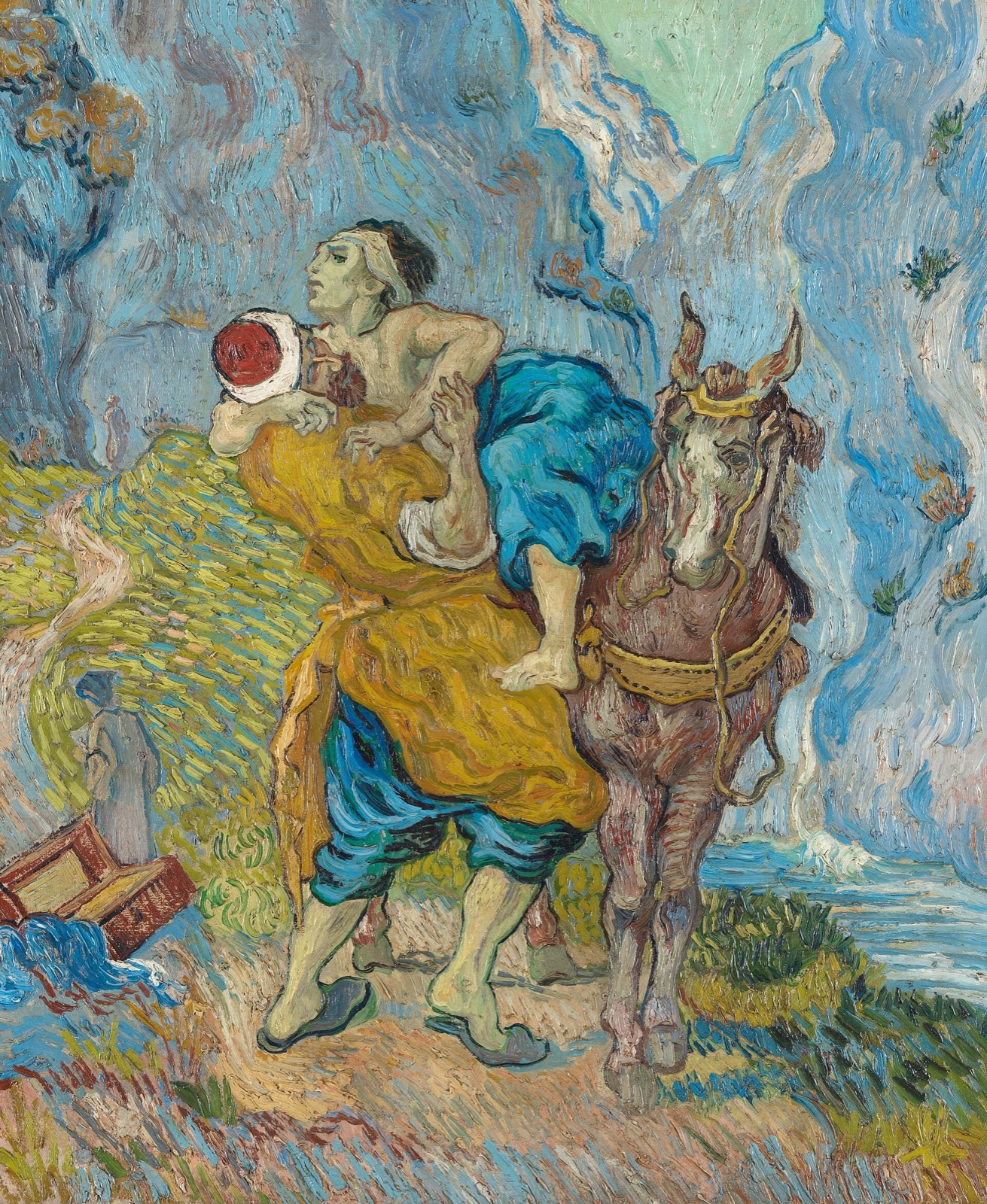
“Which of these three, do you think, proved to be a neighbor?” “The one who showed him mercy.” And Jesus said, “Go and do likewise.”
Luke 10:36–37
Vincent van Gogh, The Good Samaritan (after Delacroix), 1890. Public domain.
The Heart of It.
We read the Samaritan's story this way: he did not only bind the wounds, he also covered the cost of the man's care. Mercy that stops at the bandage can leave someone owing for their own recovery. The circle's part is to fund the partners who carry that mercy all the way.
An illustration, not a real case: picture a mother after a night in the emergency room with her son. He is fine now. The bills come weeks later, then the calls, then a collector she has never heard of. She stops answering numbers she does not know. She tells no one at church. A grant cannot undo that night, but it can help fund the charity whose letter finally says the bill is gone.
The circle gives into every kind of work below the same way, whatever the debt is and however it came.
The Part Nobody Sees
Debt is quiet. It rarely looks like a crisis from the outside, and it rarely ends on its own.
- Medical bills tend to arrive after the crisis, when the family is still recovering and the paperwork is the last thing anyone can face.
- Old debt is often sold for a small fraction of its face value, while the family is still pursued for all of it.
- A payday loan that was meant to bridge one week can renew again and again, with fees that outrun the loan itself.
- One missed month of rent can leave an eviction record that follows a family to the next lease, and the one after.
- Shame keeps people quiet. Many families carrying debt never tell their church, and the church never knows to help.
How the circle gives
Four Steps, the Same as Every Gift.
1A member names the work
With your gift, note the charity on your heart and its EIN: a medical debt charity, a payday loan ministry, a local rent fund.
2The committee looks into it
Is it an eligible public charity? Does it hold any license its work requires? Does it treat the families it serves with dignity, give its help freely, never tied to belief or church attendance, and report honestly what it does?
3The circle blesses the slate
Each season the circle blesses the grants together, one shared amen. Anyone can raise a hold for a quieter second look.
4The fund grants, the charity does the work
The founder, as the funds’ advisor, carries the slate to the fund as grant recommendations, and the fund makes the final call. A grant helps fund the work the charity is built for: forgiving debt it has bought, refinancing a loan, paying a landlord or a utility directly. Faith-led ministries can be granted from either fund; other charities, including school and district foundations, are granted through Global Seeds at Fidelity Charitable. Either sponsor may decline a grant.
The circle never buys debt itself, never pays a bill for a named person, and never claims a number the charity did not report.
Where Release Happens.
The kinds of work we look for. Faith-led ministries first, and any proven charity doing this work well.
Medical Debt Relief
Charities that buy medical debt in bulk, long after it has been written off, and then simply forgive it. A grant helps fund that work; the charity chooses which debts it buys. Nothing is asked of the families in return.
Payday Loan Relief
Ministries that pay off a family’s payday or title loan and refinance it as a zero-interest loan the family repays on terms its paycheck can carry. One loan, refinanced, can end a cycle that fees kept turning for years.
Rent and Utility Help
Emergency funds that pay a landlord or a utility directly, so one hard month need not become an eviction or a shutoff. The help goes to the bill, not to a person, and the charity decides whom it helps.
Financial Coaching
Budgeting ministries and nonprofit counselors who sit with a family, build a plan, and negotiate lower interest with creditors. The release that lasts is the one that keeps the next debt from forming.
School Lunch Balances
Clearing the unpaid meal balances that follow children through a school year, given through the school or district foundation that holds them. Small money that can lift a debt a child never chose.
Fines and Fees After Prison
Re-entry ministries that help men and women coming home clear the fines, fees and license costs that stand between them and a job.
Debts Released, on the Record.
Granted amounts come from the fund statement. Relief figures are the charity's own, for its whole work, not a result of one grant.
| Statement period | Granted | Charity | Charity's reported relief (face value) |
|---|---|---|---|
| Nothing yet. The first release will land here when a charity reports it. | |||
Honest Answers.
Why not buy the debt ourselves?
Because the charities built for this do it far better. They buy in bulk, and the ones we look for carry the licenses and the care that buying people’s debt requires, and handle the letters and paperwork with the families. The circle’s part is to help fund them well.
Can I choose a particular family or person?
No. Grants go to charities, never to a person, and the charity decides whom it helps. Please do not recommend a grant hoping it reaches a particular person, including yourself, your family or a friend, and no grant may pay a pledge or bring any benefit back to a giver. That is what keeps a gift a gift, and it protects the dignity of the families on the other end.
Do families owe tax on debt that is forgiven?
It depends on the kind of debt and the family’s situation, and this is not tax advice. A family with questions should ask a tax professional. How a charity explains this to the people it serves is one of the things the committee asks about.
Is my gift tax-deductible?
Gifts to either fund are tax-deductible to the extent the law allows, the same as every gift to the circle, with a receipt from the fund’s sponsor within 48 hours. Once given, the gift belongs to the fund, and the fund has the last word on every grant.
Will you tell me how much debt was released?
Only when the charity reports it, and only as the charity’s own figure. Medical debt charities usually report the face value of the debt they forgive, which is far more than they paid for it, and a single grant cannot be separated from the rest of their work. So the ledger shows what the circle granted, from the fund statement, beside what the charity reports, with its name and period. We never estimate it ourselves.
Name the Work on Your Heart.
Know a ministry paying off payday loans in your city, a community rent fund, or a charity clearing medical debt? Note it with your gift. The committee looks into it, the circle blesses it, and the fund makes the final call.
Gift noteSample
- For
- The recovery house nearby
- EIN
- 00-0000000
- or website
- example.org
- Gift
- Monthly seed